

Latency Phase
Plus some musings on Tradwife discourse.

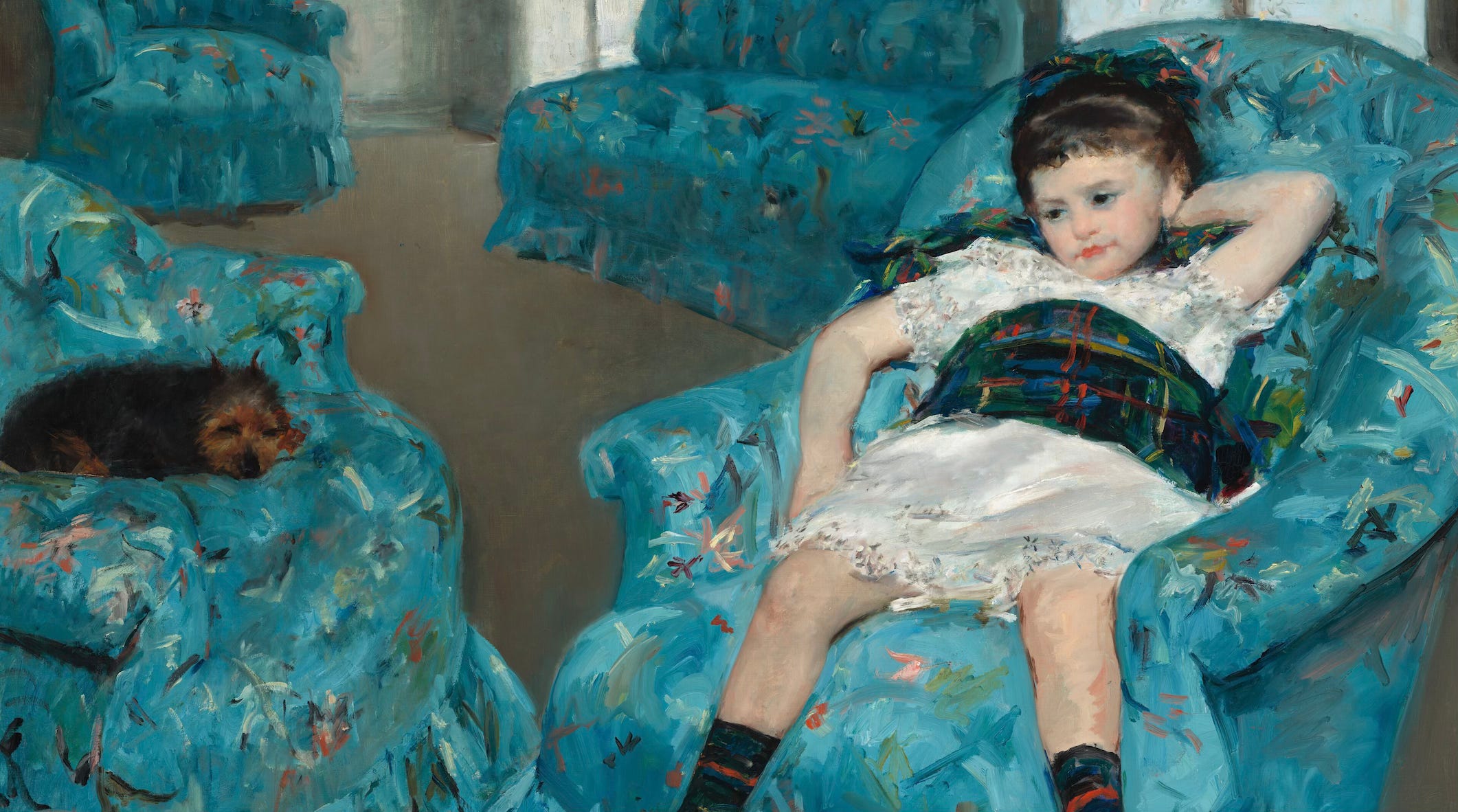
I suspect I am not alone here in reading almost every book in my parents’ house by the time I was about thirteen years old (except the ones they wanted me to read). I remember reading one about sibling rivalry and asking my Dad a few questions to see if he fell into the common traps the authors warned against. He did! My poor parents.
One of the other books I read was Reviving Ophelia by psychologist Mary Pipher. This was where I first read about the so-called latency stage in childhood development, as described by the Freud. I don’t lend much credence to that man or his ideas, but the term “latency stage”1 is interesting. It suggests quiet in anticipation of blooming, albeit perhaps not in the way Freud meant - his idea referred to the idea of latent sexuality from age six until puberty. I prefer to think of the latency phase as more like late winter, the cyclical return of the phase when the world is on the cusp of blossoming again.

Sometimes I feel I am in a latency stage now. My friends and I are all tired. Humid days and soaring temperatures loom here in Virginia. Many of us are coping with the usual toddler challenges, while others face the new joys and tribulations of preschool. Several of us are now also navigating pregnancy, with some going through all of these phases at once.
I think the consensus is that we are joyful - but we are tired! I think I detect that energy here, on Substack, as well. In some ways it feels like the Friday of the year, that day we are trying to finish before the joy of summer.
A recurring theme of my favorite posts on Substack is the importance of rest. We know God Himself rested, and as such that rest is good. But many young Americans like me grew up hearing stories of CEOs who sleep four hours a night and never go on vacation, finding ways to make even bathroom breaks productive. Would a founder care about rest?
It’s clear now that many of the success narratives Millennials and early Gen-Zers like myself imbibed as children were misleading. Never-ending work that leaves little time for eating or sleep thwarts innovation, and anyone in a wildly demanding job can attest to that. Still, slowing down is hard. Maybe that’s the point.
Given the aforementioned latency period, I have read less recently…but I did finish all eight volumes of the Unselected Journals of Emma M. Lion by Beth Brower. This series reminds me of how much we all crave a touch of magic in our daily lives - object that disappear and are found again, ghost stories, neighborhood legends. Magical realism delivered with the lightest touch is such a treat. Thanks to Hannah Lang for recommending them to me!
On a similar note, I have yet to finish Caro Claire Burke’s Yesteryear but am roughly number 1,000 in line to read it at my local library. I’ve read some excerpts and several of the early reviews, including two excellent ones by Jerusalem Desmas and Serena Sigillito.
Yesteryear is about a tradwife influencer type, but the author does not explore the narrator’s religiosity in a serious way. This does not surprise me. I received an elite, prep-school education growing up. In those circles, outside the acceptable denominations of liberal Episcopalianism and Unitarianism, Christian denominations were lumped into a single “hateful and ignorant” category. No doubt this is why the theory and praxis of Natalie’s religious observance are ignored.
Too, I think there is a pervasive misconception in progressive circles that tradwife influencers in any way reflect the experiences or aspirations of the average stay-at-home Christian mother. The Ballerina Farm lifestyle is as unobtainable to me now, as a stay-at-home Mom, as it was when I was a corporate lawyer with an infant. That is because tradwives are no different from all other major influencers. They market their lifestyles, which are an illusion, often financed by family money and made possible by significant omissions.
The thing about tradwives - and all other influencers - is that they only have as much power as the audience gives them. Yesteryear reflects a broad desire to see these women humbled - a desire that is often fair, I admit, as many are smug and mean-spirited. But it is not necessary for us to see them humbled.
All we have to do is look away.
Dr. Saul McLeod, “Freud’s Psychosexual Theory And 5 Stages Of Human Development,” SimplyPsychology.org, (13 March 2025), https://www.simplypsychology.org/psychosexual.html.
Have you read this? Reminded me of some of the things you said here! It's tongue-in-cheek but make some excellent points. https://elenabridgers.substack.com/p/lindy-west-and-hannah-neeleman-have?utm_source=share&utm_medium=android&r=e7zgp
(ps I'm tired too 😂 And now I know why! I recently learned I'm in iron transfusion territory with how low my numbers are!)
As the mother of five now adult sons I always joked about latency as being the time when cute young boys turned into farting, nose picking, “no girls allowed” creatures who both still needed but had to reject Mama. Fun times! And I also relate to your insane busyness as I see it in my older children. Always busy!! But I am a lazyass boomer and I don’t understand.
Latency also annoyed me as a midwife. The latent phase of labor was somehow understood to be a kind of useless preparation we women did for the real thing, but in fact it’s an important part of the process of labor. If women are left to their own devices, they start processes organically and steadily complete them. Look at Rachel Entrekin!
And a side note about the tradwives whose births I sometimes attend: part of the movement (influencers aside) reflects a desire to lean into that part of our nature as women.
Thank you for your thoughts!