

Rejecting the Obscene
On Wendell Berry and being normal.

In fiction and in poetry, in biography, in journalism and the entertainment industry, and finally in politics, the cutting edge for most of the twentieth century has been the dis-covering of the intimate, the secret, the sexual, the private, and the obscene.
-Wendell Berry, Life is a Miracle1
Recently I saw a commercial for an IUD with the tagline “Your Decision.” The implication was that nefarious actors pressure women into swearing off birth control. Fully half of the commercial summarized potential side effects - excessive bleeding, infertility, life-threatening (ectopic) pregnancy, and the IUD piercing the uterine wall.
That these devices maim and even kill women2 occludes the narrative of contraceptives as freedom, advanced for years by corporations to their financial benefit. As such, concern about these devices is dismissed as female hysteria.3 (I recommend the fantastic work of Haley Baumeister4 if you want to read more about the origins of many forms of contraceptives and their adverse effects - it is a topic worth examining in depth).

Many have observed that despite the post-1960s evaporation of sexual taboo, young people have less sex than ever today. If you want to know why, look no further than this unironic article from NPR - “Gen Z is afraid of sex, and for good reason.” It includes an interview with an alleged expert who says, “I think what they [Gen Z] are doing, though, is outsourcing a lot of their sexuality to the internet.”5
He elaborates:
When I talk to young people, straight ones who are worried about getting pregnant or impregnating somebody else, they were petrified. And I think that feeling that people are now going to face a kind of punishment for sex, because they'll be forced to have kids that they don't want — I think that is really rife within Gen Z.
This would be laughable were it not asserted with such gravity. Surely prior generations who lacked reliable access to hormonal birth control were concerned about unintended pregnancy, but fortunately young people were not trained to be “petrified” of the natural consequences of sex.
Berry again:6
In fact, our “sexual revolution” is mostly an industrial phenomenon, in which the body is used as a idea of pleasure or a pleasure machine with the aim of “freeing” natural pleasure from natural consequence.
Like any other industrial enterprise, industrial sexuality seeks to conquer nature by exploiting it and ignoring the consequences, by denying any connection between nature and spirit or body and soul, and by evading social responsibility. The spiritual, physical, and economic costs of this “freedom” are immense, and are characteristically belittled or ignored. The diseases of sexual irresponsibility are regarded as a technological problem and an affront to liberty.
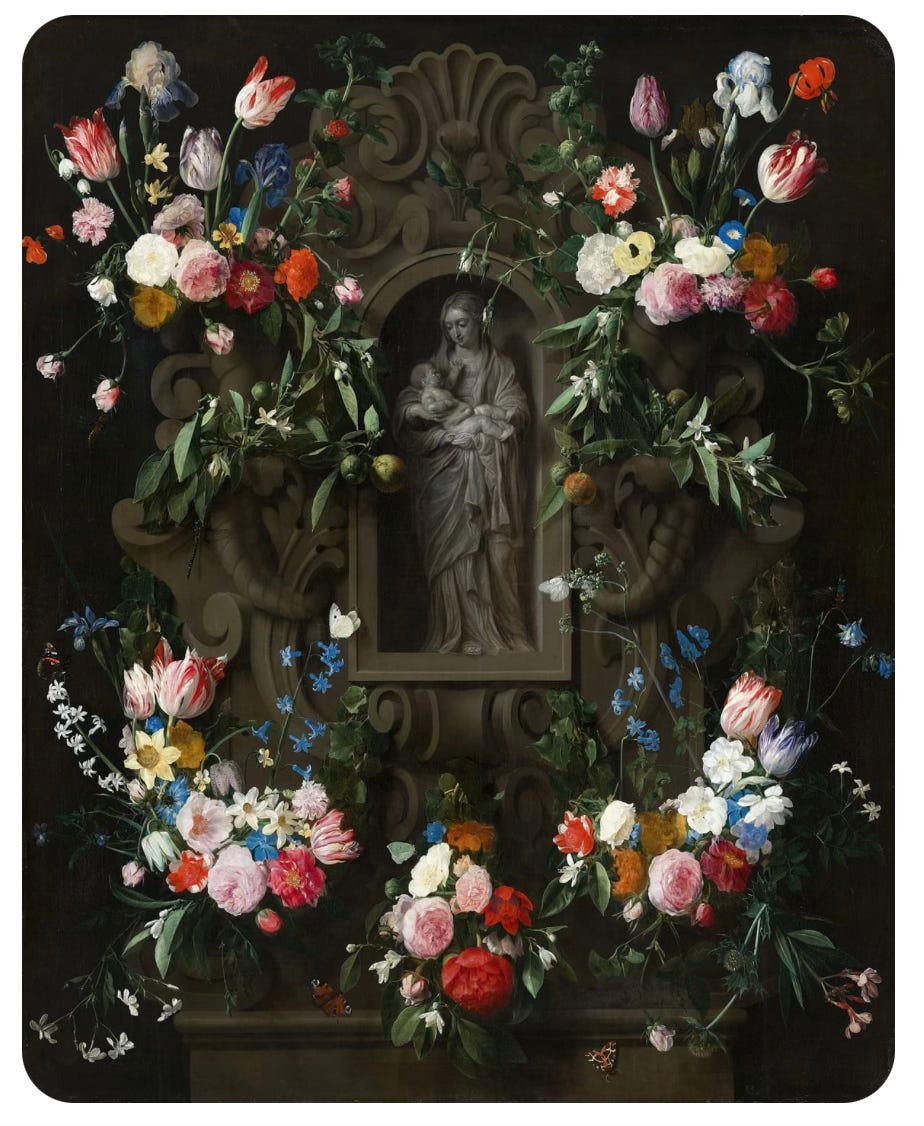
As terrible as the consequences of the sexual revolution have been, many religious figures are taking an equally damaging approach. There’s the problem of not discussing sex at all, but more prevalent is an obsessive attitude that considers the female body an endless source of temptation and shame.
In fact, secular culture and “purity culture” seem to understand sexuality in much the same way. Both portray the ideal woman as constantly sexually available, though without what Berry described as natural consequence (like pregnancy). Both see even the most innocent relationships as potentially obscene. And both view women - and all too often girls - as not whole persons but vessels for sexual pleasure.
There is an alternative. It is what the imitable Lane Scott might call “being normal,”7 which somehow feels rare today. The reasonable person acknowledges that sex is wonderful while recognizing that taboos exist for a reason. Our children should know that sexual desire is not in itself shameful but that plenty of sexual behavior is.
Most of all we should remind each other that sex can never be totally “safe” and that, when sex is risky, women disproportionately bear the consequences. Those who say otherwise - including corporations pretending that the suppression of the menstrual cycle can never occur without consequences, for instance - do not have the best interests of women at heart. There’s a reason Dostoevsky exhorted his audience “above all, avoid lies, especially the lie to yourself.”8 The sexual revolution was built on lies, but purity culture was, too. The lie is that sex is something we can reliably contain so that nothing bad will ever happen to us. The female body suffers under these paradigms most of all.
Next time you hear a culture warrior from either side of the aisle making grandiose public claims about their sex lives, remember this:
Public sexual revelations and public obscenity are now merely clichés, part of the uniform behavior of modish nonconformity and professional bad manners, but always performed by people who wish to be thought courageous.
-Wendell Berry, Life is a Miracle
Wendell Berry, Life is a Miracle, Part III, Section 6, Counterpoint Press (2003).
Google “IUD deaths” and “Dalkon shield.”
https://www.washingtonpost.com/health/2024/03/21/stopping-birth-control-misinformation/.

Liam McBain, “Gen Z is afraid of sex - and with good reason,” NPR (11 June 2025), https://www.npr.org/2025/07/11/nx-s1-5454738/gen-z-is-afraid-of-sex-and-for-good-reason.
Wendell Berry, “The Work of Local Culture,” The World-Ending Fire (edited by Paul Kingsnorth, Penguin Books, 2017), “Feminism, the Body, and the Machine.”

Fyodor Dostoevsky, The Brothers Karamazov, Part I, Book II, Chapter 4 (trans. Richard Pevear and Larissa Volokhonsky) (Picador, 1990).
Preach! A lot more normalcy is what we need. And gotta love the far left/right u-bend
Your ability to distill the lies of the far left and far right is powerful. I’m reminded of the maxim that is helpful in many of life’s circumstances, “Before you know if something is working, you need to know what it’s for.” Once we understand what sex is for, we can understand how it best “works” in our lives.